
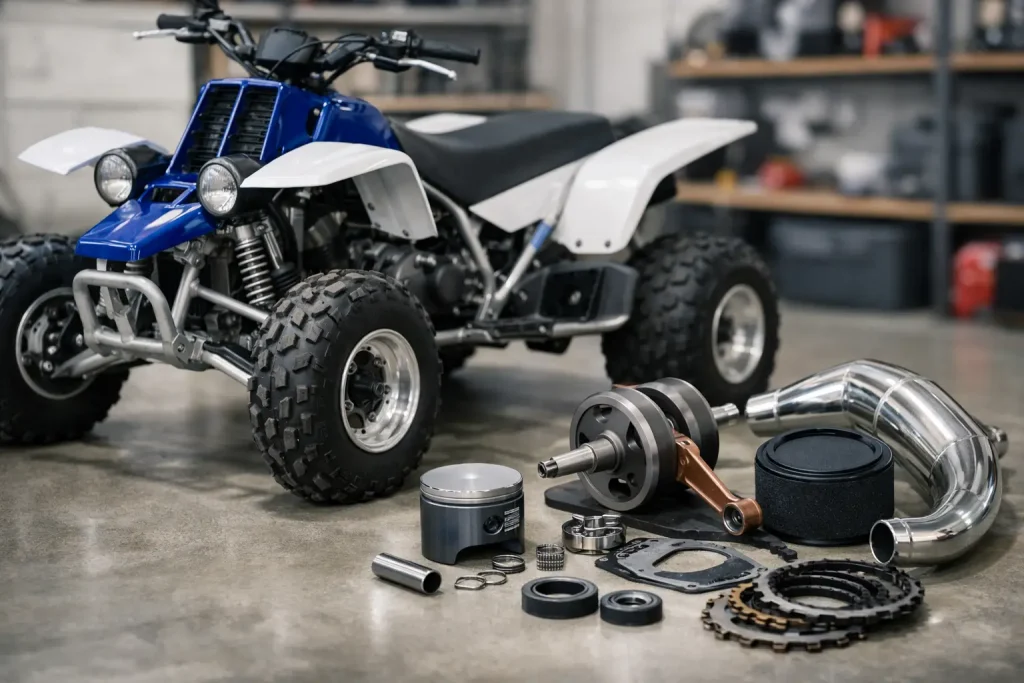
If you have ever lost a weekend chasing a bad fitment issue, you already know why Yamaha Banshee 350 OEM parts still matter. The Banshee is not a generic sport quad, and treating it like one usually ends with wasted money, stripped time, and a machine that never feels quite right. When you are restoring a clean rider, repairing a hard-used quad, or keeping a collector build true to factory spec, OEM parts are often the difference between done right and done twice.
Why Yamaha Banshee 350 OEM parts still matter
The Banshee has earned its place because it is fast, simple, and brutally fun when everything is working together. That last part matters. On a two-stroke performance platform, little mismatches show up quickly. A seal that is slightly off, a cheap electrical component, or hardware with the wrong finish or dimensions can create problems that spread beyond one part.
OEM parts bring predictability. Fitment is correct, materials are closer to what Yamaha intended, and the install process tends to go smoother. For riders who use their Banshee hard, that means less downtime. For restorers, it means keeping the machine faithful to the original build. For buyers trying to protect value, factory-correct parts usually help the quad hold its appeal better than a patchwork of questionable replacements.
That does not mean OEM is always the only answer. Some aftermarket parts outperform stock in the right application, especially for engines, suspension, and exhaust. But when the goal is reliability, clean fit, and factory-correct function, OEM is still the baseline.
Where OEM makes the biggest difference
Some areas of the Banshee are more forgiving than others. Cosmetic items can be a matter of budget and preference. Core mechanical and electrical systems are less flexible.
Engine and top-end support
A Banshee engine rewards precision and punishes shortcuts. Gaskets, seals, bearings, water pump components, shift-related parts, and internal hardware are all areas where OEM quality can save you from repeat labor. If you are already deep into a motor build, the cost of doing it twice is almost always higher than buying the right parts the first time.
This is especially true on machines with unknown history. A lot of Banshees have been rebuilt, modified, or pieced together over the years. When you tear one down, you may find mixed-year parts, worn fasteners, or previous repairs that were good enough to move the quad but not good enough to trust. OEM parts help re-establish a solid foundation.
Electrical and ignition components
Electrical issues on an older sport quad can turn into a guessing game fast. Stators, coils, switches, wiring pieces, and ignition-related components need proper fit and dependable output. Riders often try the cheapest replacement first, then end up buying the correct part after chasing spark issues, intermittent failures, or weird running problems.
On the Banshee, electrical reliability is not just convenience. It affects starting, throttle response, and overall ride confidence. If you want to kick it, fire it, and ride instead of diagnosing it at the truck, quality matters.
Chassis, braking, and controls
OEM parts also shine in the areas you feel every time you ride. Bushings, brake components, levers, cables, mounts, and control hardware do more than complete the machine. They shape how tight, responsive, and trustworthy it feels. A Banshee with worn or ill-fitting control parts can still move, but it will not feel crisp.
For riders building a dependable trail quad or a clean duner, this is where a lot of satisfaction comes from. The machine should feel right, not just run.
OEM vs aftermarket on a Yamaha Banshee
This is where a lot of owners get stuck, and the honest answer is that it depends on your goal.
If you are doing a restoration, OEM is usually the smart move in visible factory areas and critical mechanical systems. It protects originality and reduces fitment surprises. If you are building a performance machine, aftermarket may make more sense for pipes, porting-related components, suspension, or intake upgrades, while OEM still handles the supporting pieces that keep the whole package reliable.
There is also a middle ground. Many Banshee owners run a hybrid setup: OEM where fit and function matter most, aftermarket where performance gains are proven and worth the trade-off. That is often the best real-world answer, especially for riders who want both speed and durability.
The mistake is assuming all aftermarket parts are equal or that all OEM choices are automatically necessary. A smart build starts with the use case. Show quad, trail rider, dune build, woods machine, or collector piece – each one calls for a different parts strategy.
How to buy Yamaha Banshee 350 OEM parts without wasting money
The biggest cost in Banshee ownership is not always the part itself. It is buying the wrong part, installing it, and then backing up to fix the mistake.
Start with the exact year and model information. Banshees changed over time, and small differences can affect fitment. That matters for plastics, electrical pieces, mounting hardware, and internal components. If your quad has been modified, verify what is actually on the machine instead of assuming it is still fully stock.
Next, think in systems instead of single parts. If you are replacing one worn item, ask what else around it has the same age and wear. A fresh OEM gasket on top of tired mating surfaces or worn hardware does not always solve the root issue. The same goes for brakes, controls, and suspension points. Replacing the obvious bad part is sometimes enough, but often the smarter move is refreshing the related pieces at the same time.
Finally, buy from a source that actually knows the Yamaha Banshee. This platform is old enough and specialized enough that generic parts support is not always helpful. You want people who understand fitment, common failure points, and where OEM is worth the premium. That is where a focused marketplace like Banshee Retailer has a real advantage – not just inventory, but category-specific knowledge that keeps your build moving in the right direction.
What owners usually overlook
A lot of Banshee projects stall because the owner plans for the major parts and forgets the smaller OEM pieces that make the job complete. Hardware, clips, seals, grommets, brackets, washers, and factory-style mounting components are easy to ignore until the install starts. Then the project sits while you hunt down one missing piece.
These are not glamorous purchases, but they matter. They affect fit, finish, and reliability, especially on builds where you want everything to line up and stay put. A clean Banshee is usually the result of paying attention to the details most people skip.
Another overlooked factor is future serviceability. OEM parts often make later maintenance easier because dimensions and placement stay true to spec. That is valuable if you ride regularly and want the quad to be easy to work on next season, not just assembled enough to make the next trip.
When OEM is worth paying more for
Not every part needs a premium decision. But some do.
If the part affects sealing, ignition, cooling, shifting, braking, or core chassis feel, OEM is usually money well spent. If the part is visible on a restoration or collector build, OEM often makes sense there too. If failure means tearing the machine back apart, the better part usually wins the argument.
On the other hand, if you are building a pure performance quad and replacing a stock system entirely, OEM may not be necessary in that area. The key is being intentional. Spend where factory quality protects the machine. Upgrade where performance gains are proven. Avoid the cheap middle ground that gives you neither.
The right parts keep the Banshee what it is
The Yamaha Banshee has survived this long because riders still care enough to keep them right. That means knowing when originality matters, when performance upgrades make sense, and when a repair needs factory-correct parts instead of a shortcut. OEM parts are not just about nostalgia. They are about preserving the feel, function, and value that made the Banshee legendary in the first place.
If your quad deserves to start easier, fit better, and stay truer to what Yamaha built, the right OEM parts are not an extra. They are part of keeping the machine worthy of the name on the tank.