
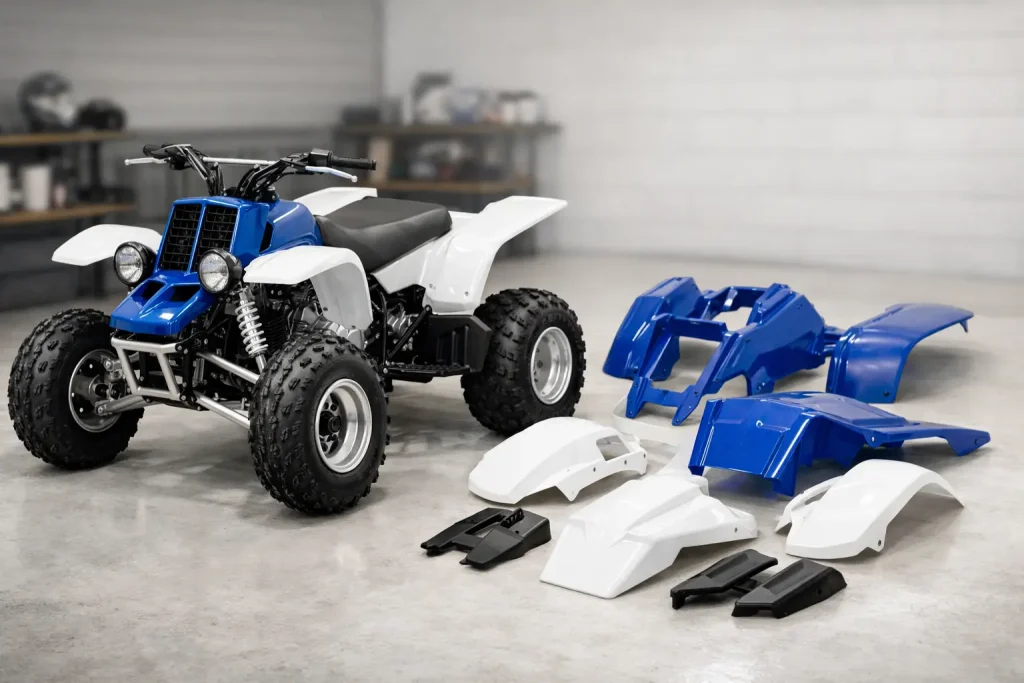
A clean set of plastics changes the whole attitude of a Banshee. Faded panels, broken tabs, and mismatched colors can make a strong-running quad look tired fast. If you are searching for a 1996 Yamaha Banshee OEM plastic kit, you are usually after more than looks – you want proper fit, factory lines, and the right foundation for a real rebuild.
That matters because plastics on a 1996 Banshee are not just cosmetic pieces. They affect mounting stability, seat fit, tank shroud alignment, and the overall quality of the machine when you stand back and look at it. Riders who care about original style know the difference right away. Restorers care even more.
Why a 1996 Yamaha Banshee OEM plastic kit still matters
The 1996 Banshee sits in a sweet spot for enthusiasts. It is old enough to be worth preserving correctly, but still popular enough that people actually ride, race, and rebuild them. That creates a real split in the market. Some owners want an exact-looking machine. Others just want decent plastics that bolt on and survive a weekend in the dunes or woods.
OEM-style plastic matters because fitment is usually the first place cheap replacement bodywork falls apart. Mounting holes can be off. Edges can sit unevenly around the tank and seat. Fender shape can look just a little wrong from ten feet away, which is enough to bother anyone who knows Banshees. If you are putting money into engine work, suspension, axle setup, or fresh powder coat, bad plastics drag the whole build down.
For many buyers, the goal is not chasing perfection at any cost. It is finding the right balance between originality, condition, and availability. That is where knowing what a true OEM plastic kit includes and how to judge one becomes important.
What is included in a 1996 Yamaha Banshee OEM plastic kit?
When riders say plastic kit, they do not always mean the same thing. Some are talking about the major body pieces only. Others expect every trim panel that completes the bike. On a 1996 Yamaha Banshee, an OEM-style setup typically centers on the front fenders, rear fenders, tank cover area, and side sections that create the factory body profile.
What you actually receive depends on the source. Some kits are complete take-off sets from an original machine. Others are mixed-condition OEM pieces assembled into one package. That difference matters. A true matched set will usually have more consistent color fade, cleaner body lines from piece to piece, and less frustration during install.
You also want to pay attention to whether mounting hardware, rubber grommets, and related trim are included. A great-looking set of plastics can still turn into a headache if the tabs are good but the supporting hardware is missing or worn out.
OEM vs aftermarket for a 1996 Banshee
This comes down to priorities. OEM plastics are the standard if you want factory look, correct finish, and the best chance at original fitment. They are especially valuable for restorations and cleaner collector-grade builds. If you are trying to preserve the identity of a 1996 machine, OEM is usually the right move.
Aftermarket plastics can still make sense. They are often easier to find, they may cost less depending on condition, and they are useful for aggressive riders who care more about replacing broken bodywork quickly than keeping a stock appearance. The trade-off is consistency. Some aftermarket options fit well enough. Some need trimming, persuasion, or acceptance that the lines are simply not factory-sharp.
If your build is a hybrid – performance motor, upgraded suspension, fresh wheels, but still a clean stock-inspired look – OEM or OEM-style bodywork usually gives the best final result.
How to evaluate a used 1996 Yamaha Banshee OEM plastic kit
Original Banshee plastics are getting harder to find in truly clean condition, so inspection matters. Color is the first thing most people notice, but color alone should not drive the decision. A faded set can sometimes be worth buying if the structure is strong. A glossy set with repaired tabs and hidden cracks can be a worse investment.
Start with the mounting points. Cracks around bolt holes, torn tab areas, and stress whitening near the mounts are signs that the plastic has been over-tightened or flexed hard over time. Then check the outer fender edges and under-fender sections. That is where trail contact, transport damage, and years of use usually show up.
Look for repairs from the back side. Plastic welding is not automatically a deal breaker, but quality matters. A professional repair can be durable. A rough melt job with poor reinforcement usually means future problems. If the machine is being restored for show-quality presentation, repaired plastics may still fall short even if they hold together.
Sun fade is another area where expectations need to be realistic. Red, blue, black, and white panels age differently, and older OEM pieces rarely look brand new unless they have lived a very easy life. The bigger question is whether the fade is even and whether the set still looks matched once installed.
Signs you found a worthwhile OEM set
A worthwhile set usually has straight body lines, intact tabs, no major warping, and only the kind of wear you would expect from a real 1996 machine. Minor scuffs can be managed. Deep gouges, spider cracking, and repairs at multiple mounting points are where the value starts dropping fast.
Factory-style fit is also a hidden value point. If a set has not been badly distorted by heat, abuse, or poor storage, installation tends to go much smoother. That saves time, reduces stress on mounting hardware, and gives the quad the tight, correct stance riders want.
Fitment details that buyers often overlook
One of the biggest mistakes Banshee owners make is assuming all body pieces from neighboring years are identical in every practical sense. There is a lot of interchange in the Banshee world, but that does not mean every piece in every condition will deliver the result you want.
Used plastics often come from bikes that have had mixed parts over the years. Seats get swapped, tanks get changed, subframes get tweaked, and hardware gets improvised. Then the buyer blames the plastic when the real problem is the machine underneath it. If your 1996 Banshee has seen years of hard riding or pieced-together repairs, inspect the mounting locations on the quad before you blame a plastic kit for poor alignment.
This is also why experienced Banshee buyers prefer sourcing from specialists who understand what they are looking at. General ATV sellers may call a set complete without knowing a tab has been repaired, a panel has been trimmed, or the color set is not actually matched. In a niche market like this, details are the difference between a smooth install and a parts pile on the bench.
Is OEM plastic worth the premium?
For a lot of riders, yes. If you are investing in a real rebuild, trying to hold value in a desirable machine, or building a Banshee that looks right from every angle, OEM plastic is usually worth paying for. The fit, shape, and authenticity are hard to duplicate.
That said, it depends on the build. A dune rider who knows the quad will see regular abuse may not need collector-level plastics. A budget refresh for a rider-grade machine may be better served by a solid used set with minor flaws instead of chasing near-perfect OEM pieces at top dollar. There is no shame in buying based on how the quad will actually be used.
The key is being honest about your goal. If you want a clean rider, buy for structure and fit. If you want a restored machine, buy for originality and presentation. If you want both, expect the price to reflect it.
Buying a 1996 Yamaha Banshee OEM plastic kit with confidence
The safest move is to buy from a seller who knows Banshees well enough to describe condition accurately and answer fitment questions without guessing. Clear photos, close-ups of tabs and mounting points, honest notes about fading or repairs, and realistic expectations are all signs you are dealing with someone who understands the platform.
At Banshee Retailer, that level of specialization is exactly what serious owners look for. When you are chasing hard-to-find bodywork for a legacy two-stroke, category expertise is not just nice to have – it keeps you from buying the wrong part twice.
A 1996 Banshee deserves plastics that fit the machine and the purpose behind the build. Whether you are bringing one back to factory style or just replacing beat-up bodywork with something worthy of the chassis, the best kit is the one that matches your standards, your riding plans, and the reality of what a thirty-year-old sport quad needs. Get that part right, and the rest of the build starts looking a whole lot more serious.