
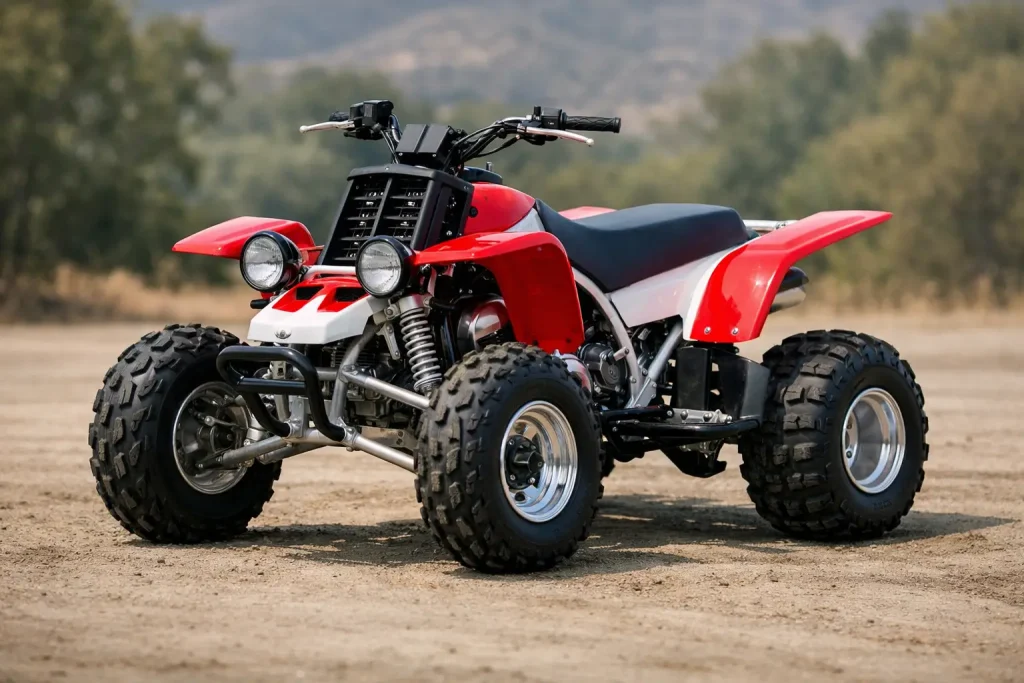
There is a reason the 1992 Yamaha Banshee still gets attention the second it rolls off a trailer. The stance is right, the twin-cylinder two-stroke hit is unmistakable, and the whole machine feels like it was built for riders who want an ATV with real attitude. For buyers, restorers, and current owners, this model year sits in the sweet spot – old enough to have real vintage appeal, but still supported well enough that a smart build can stay fast, clean, and dependable.
Why the 1992 Yamaha Banshee Still Matters
The Banshee was never just another sport quad. It earned its reputation because it delivered a riding experience that felt raw, quick-revving, and aggressive in a way few machines could match. A 1992 model carries that same DNA, which is exactly why clean examples are still chased by collectors and performance riders across the country.
For some owners, the appeal is originality. They want a machine that looks close to factory, with period-correct plastics, stock-style components, and a clean engine bay. For others, a 1992 Yamaha Banshee is a starting point for a bigger plan – pipes, carbs, suspension, port work, fresh crank seals, and the kind of chassis refresh that turns an aging quad into a serious dune or trail machine. Both approaches make sense. The value depends on whether you want nostalgia, performance, or a balance of both.
What makes this model year especially interesting is that it lives in a market where condition matters more than age alone. Two machines from 1992 can be worlds apart. One might be a tired ATV with worn electricals, questionable engine work, and hacked-up intake parts. Another might be a properly maintained or professionally rebuilt Banshee that is worth paying real money for.
What to Check Before You Buy a 1992 Yamaha Banshee
A clean listing does not always mean a clean machine. On a platform this old, the real story is in the details.
Start with the engine. The Banshee’s two-stroke twin is the heart of the machine, and it needs to be evaluated carefully. Compression numbers matter, but they are not the only thing. You also want to know whether the crank has any play, whether the cylinders were bored correctly, whether the jetting matches the current setup, and whether the top end work was done by someone who knew these engines. A fresh rebuild on paper is not enough if the tuning is off or the parts quality is questionable.
The intake and exhaust setup can tell you a lot. Aftermarket pipes, pods, and carbs are common, but not every modified machine was tuned properly after the parts were installed. Lean setups, poor filtration, and sloppy carb synchronization can turn a strong-running Banshee into an expensive repair project. If the machine has performance parts, that is not a negative by itself. It just means the quality of the setup matters even more.
The chassis deserves the same level of attention. Check the frame for cracks, poor weld repairs, rust, and signs of hard use. Look closely around the foot peg area, subframe mounts, and front suspension points. Sloppy steering, worn swingarm bushings, tired carrier bearings, and blown shocks are common on older machines. None of those are deal-breakers, but they change the value fast.
Electrical condition is another area buyers underestimate. Many older Banshees have seen years of quick fixes, spliced wires, and aftermarket add-ons. A machine with a clean harness and dependable ignition system is worth more than one with mystery wiring and intermittent spark issues.
Stock vs Modified 1992 Yamaha Banshee
This is where buyers need to be honest about their goals. If you want a collector-style machine, a mostly stock 1992 Yamaha Banshee will usually be more appealing than a heavily modified build. Original-style parts, factory appearance, and uncut components matter to that crowd.
If your goal is riding and performance, a modified machine can be the better buy – but only when the build is done right. Good pipes, quality pistons, proper carb setup, fresh seals, and a documented engine build can save you time and money. The problem is that the Banshee market has plenty of machines built with mixed parts, unknown tuning, and shortcuts hidden under fresh plastics.
That is the trade-off. A stock machine may cost more upfront if it is clean and unmolested. A modified machine may look like a better deal, but if the setup is wrong, you can spend the difference quickly fixing what someone else did poorly.
Parts Availability and Long-Term Ownership
One of the biggest reasons the Banshee has stayed relevant is support. Even though the platform is older, parts availability is still strong compared to many vintage sport quads. That makes a 1992 model a realistic machine to own, ride, restore, and improve.
You can still source everything from top-end components and clutch parts to axles, plastics, electrical pieces, and performance upgrades. That matters because ownership is not just about getting the machine home. It is about keeping it running right over time.
Still, not all parts are equal. Some owners want OEM-style reliability and fitment. Others are looking for aftermarket performance and are willing to tune around it. Again, it depends on the build. A dune rider may prioritize power delivery and cooling upgrades. A trail rider might care more about dependable low-end response, clean jetting, and suspension refreshes that make the machine easier to ride all day.
This is where a specialist matters. A general ATV seller may have a Banshee in stock. A dedicated Banshee source understands the difference between a random replacement part and the right part for your exact setup.
Common Ownership Mistakes
The biggest mistake is buying based on cosmetics alone. Fresh plastics and polished parts can distract from worn internals, weak compression, or neglected chassis wear. A second common mistake is assuming every modified Banshee is automatically faster and better. Some are. Some are simply louder and less reliable.
Another issue is mismatched setups. A machine might have pipes but stock jetting, bigger carbs but poor intake sealing, or engine work without the supporting clutch and cooling upgrades. The Banshee responds well to modifications when the package makes sense. It responds badly when parts are thrown together.
Maintenance shortcuts also shorten the life of these machines. Cheap pistons, unknown gaskets, poor assembly practices, and guesswork tuning are all expensive in the long run. On a two-stroke platform, details matter. Air leaks matter. Fuel quality matters. Proper warm-up matters.
Is a 1992 Yamaha Banshee a Good Buy Today?
For the right buyer, absolutely. If you want a machine with modern convenience and minimal maintenance, this probably is not your best fit. If you want one of the most iconic sport ATVs ever built, with huge aftermarket support and serious personality, the 1992 Yamaha Banshee still delivers.
It is a strong buy for riders who appreciate two-stroke power and are willing to stay on top of maintenance. It is also a solid buy for restorers who want a project with real enthusiast value. Even first-time Banshee buyers can do well with this model year if they buy carefully and work with people who know the platform.
The key is buying condition, not hype. A properly sorted Banshee can be a blast to own. A neglected one can become a constant repair bill.
How to Get More From a 1992 Yamaha Banshee
Once you have a good machine, the smartest upgrades usually focus on reliability first and performance second. A healthy engine, sealed intake, correct jetting, solid clutch, fresh suspension components, and dependable tires will transform the ride more than random bolt-ons ever will.
After that, build around how you actually use the quad. Sand riders may want aggressive power upgrades and gearing changes. Trail riders often benefit more from smoother throttle response, suspension service, and chassis stability. Some owners want a clean stock-style restoration with subtle improvements that preserve the original feel. Others want a full performance package. Neither route is wrong if the work is done with purpose.
That is why dedicated Banshee support matters. At Banshee Retailer, the value is not just access to machines and parts. It is access to people who understand what works together, what fails, and what is worth upgrading on a platform this specific.
The best 1992 Yamaha Banshee is not always the cheapest one or the most modified one. It is the one built, maintained, and supported with the same level of commitment that made the Banshee legendary in the first place.