
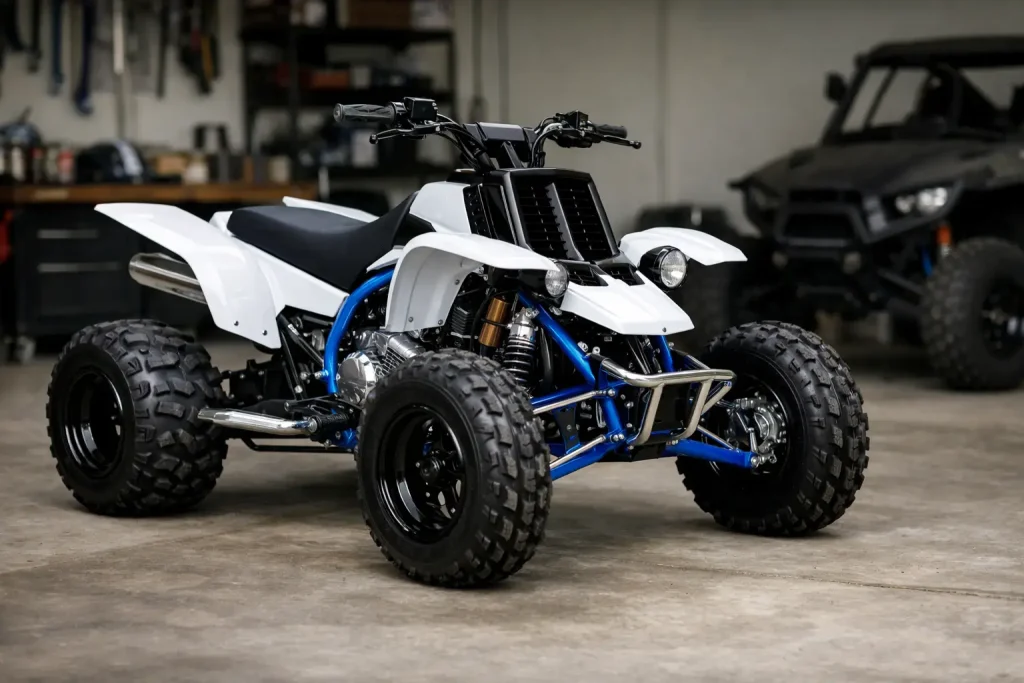
A fast Banshee is easy to talk about. A Banshee that pulls hard, stays rideable, and doesn’t eat parts every other weekend is where real yamaha banshee performance builds separate themselves from random bolt-ons.
That matters because the Banshee rewards smart combinations and punishes mismatched ones. You can spend serious money on cylinders, pipes, carbs, and ignition, then end up with a quad that feels peaky, fouls plugs, or runs hot because the setup was built around parts instead of a purpose. If you want power you can actually use, the build has to make sense from top to bottom.
What Yamaha Banshee performance builds should start with
The first question is not how much horsepower you want. It’s how you ride. A dune setup, a drag setup, a woods build, and a play-rider trail quad all want power in different places.
If you ride dunes, you usually want a broad pull with enough over-rev to keep the quad charging through soft sand. Trail riders often need quicker response and a powerband that comes in sooner, especially if the terrain is tight. Drag riders can live with a narrower, more aggressive hit because the goal is simple – maximum acceleration in a short window. A collector or casual owner may want a mild setup that keeps the machine fun, reliable, and easy to start.
That’s why the best builds are not always the biggest builds. A stock-stroke trail Banshee with a clean top end, matched pipes, properly sized carbs, and good clutching can feel stronger in the real world than a bigger motor with poor tuning.
The foundation matters more than the shiny parts
Before adding power, make sure the engine and chassis are healthy. Compression, crank condition, seals, cooling system, clutch health, and carb integrity all matter. On a two-stroke twin like the Banshee, air leaks and tired bottom-end components can ruin a performance build fast.
A lot of owners skip this part because it is less exciting than ordering cylinders or exhaust. That’s a mistake. If the crank is questionable, the reeds are worn, the carbs are dirty, or the cooling system is weak, added power only increases the odds of failure.
The chassis deserves the same attention. Suspension, axle bearings, swingarm bearings, chain alignment, tires, and brakes all affect how usable your new power will feel. A strong engine in a loose, poorly set up chassis is not a finished build. It’s a problem waiting for speed.
Mild Yamaha Banshee performance builds for real-world riding
A mild build is usually the smartest place to start, especially for riders who want more excitement without giving up reliability. This kind of setup focuses on airflow, response, and clean tuning rather than chasing a dyno number.
For many riders, that means quality pipes, fresh reeds, proper jetting, intake improvements, and a healthy top end. On a stock or lightly modified motor, those changes can completely wake the quad up. Throttle response gets sharper, the engine clears out better, and the powerband feels more alive without becoming hard to manage.
This is also where proper clutch setup earns its keep. If the clutch slips or engagement is inconsistent, you are leaving performance on the table. A clutch that matches your riding style helps the engine stay in its sweet spot, which can make a mild build feel much stronger than expected.
For owners who actually ride their Banshee often, this level of build usually delivers the best balance. It keeps the machine fun, responsive, and easier to maintain while avoiding the domino effect of constant supporting upgrades.
Mid-level builds are where planning becomes critical
Once you move into porting, bigger carbs, cylinder work, or more aggressive exhaust combinations, the margin for error gets smaller. Mid-level builds can be fantastic, but they demand parts that work together.
Port timing has to match the intended use. Carb size needs to support the engine without killing response. Compression has to fit the fuel you plan to run. Pipes need to match the cylinder characteristics, not just the marketing. This is where many builds go sideways. Riders buy high-performance parts individually, but the engine only responds well when the whole package is matched.
Ignition timing and cooling also become more important here. As cylinder pressure and RPM potential increase, bad fuel decisions or lazy tuning can get expensive. A properly built mid-level Banshee can be an absolute weapon in dunes, trails, or open riding, but only if the details are right.
Big bore and stroker builds are not for everyone
A large-displacement Banshee has serious appeal, and for good reason. When built correctly, it can deliver huge torque, stronger midrange, and impressive top-end power. But this is the point where trade-offs become impossible to ignore.
Big bore and stroker setups often require more than just top-end parts. You may need case work, crank upgrades, different domes, better cooling, revised gearing, stronger clutch components, and more careful fuel choices. Tuning becomes more sensitive. Maintenance expectations go up. Cost rises fast.
That does not make these builds a bad choice. It just means they need an honest owner. If your goal is maximum power and you understand the support parts and tuning commitment, a larger build can be worth every dollar. If you mainly want a dependable weekend ripper, a smaller and cleaner package may serve you better.
Tuning is where power is won or lost
No matter how good the parts are, poor tuning can make a strong build feel weak and can destroy a fresh engine. On the Banshee, carb jetting, synchronization, float height, plug reading, timing, and fuel quality all matter.
A motor that is too rich may feel lazy and dirty. A motor that is too lean may feel crisp right before it causes damage. That is why tuning should never be treated like a quick final step. It is part of the build itself.
Altitude, temperature, humidity, riding style, and fuel all affect what the engine wants. A dune rider in one region may need a different setup than a trail rider in another. Even two similar builds can respond differently based on compression, pipes, and port work. The only smart approach is to tune the actual machine in the conditions it will see.
Supporting mods that make a bigger difference than people expect
Not every performance gain comes from the engine. Gearing can change how the power feels immediately. Paddle selection matters in sand. Tire size affects acceleration and load. Suspension setup helps the quad carry speed and stay controlled under power.
Then there is intake sealing, fuel delivery, cooling efficiency, and driveline condition. These are not glamorous upgrades, but they help the machine use its horsepower instead of wasting it. A Banshee that hooks up, stays cool, and shifts power cleanly often feels faster than one with a more expensive engine and a weaker overall setup.
This is also where experienced Banshee-specific support matters. A general powersports shop may understand engines, but the Banshee has its own rhythm. Parts selection, fitment, tuning habits, and known weak points are different when you are working with a high-performance two-stroke platform that owners still push hard decades later.
How to choose the right builder and parts path
If you are investing in yamaha banshee performance builds, ask simple questions first. What kind of riding is this quad built for? Which parts are being matched together, and why? What fuel will it need? What maintenance should you expect? What support is available after the build is done?
Those answers tell you a lot. Real Banshee specialists do not just sell horsepower. They help you avoid mismatched parts, bad assumptions, and expensive rework. They know when a customer needs a mild reliable setup instead of a race-style package, and they know when a serious rider is ready for a more aggressive combination.
That focused support is a big reason riders come to a dedicated source like Banshee Retailer. When the inventory, service knowledge, and repair capability all revolve around one platform, you are more likely to get a build that fits your riding instead of a generic parts pile.
The strongest Banshee builds are not built for bragging rights first. They are built to run hard, stay consistent, and keep delivering that unmistakable twin-cylinder hit every time you stab the throttle. Start with a real goal, build the foundation correctly, and let the setup match the ride you actually want.