
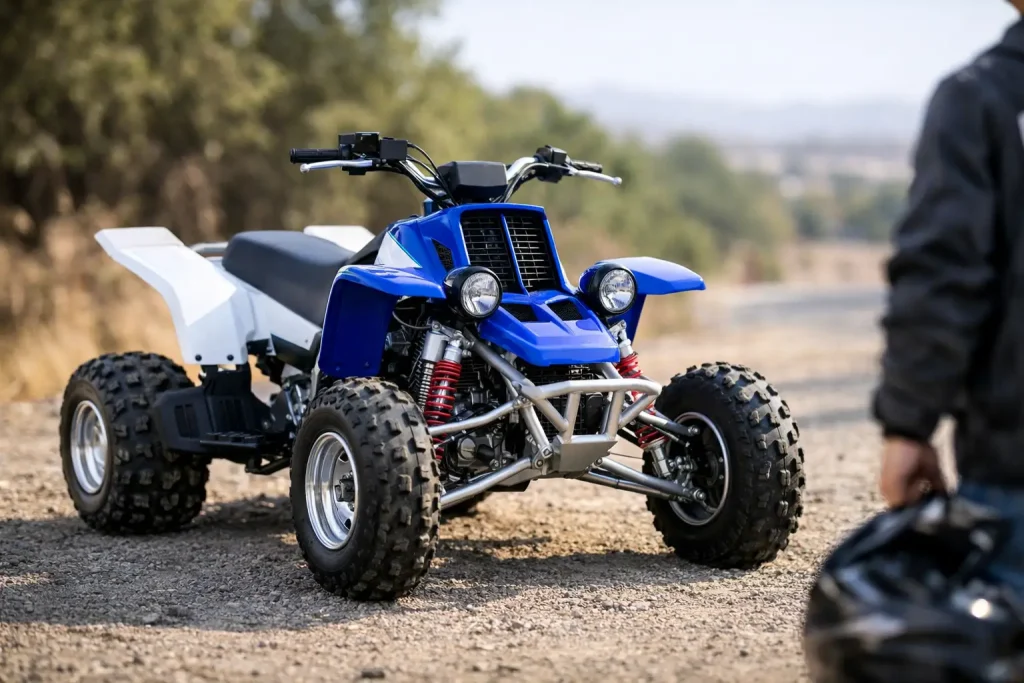
You can find a used Yamaha Banshee for sale in five minutes. Finding one that is actually worth your money is the part that separates a smart buy from a long repair bill. With Banshees, the photos rarely tell the whole story. Plastics can be cleaned up, frames can be painted, and a fresh set of tires can distract from engine problems, poor tuning, or years of hard riding.
That is why serious buyers do not shop a Banshee the same way they shop a generic used ATV. This machine has a reputation for speed, sound, and two-stroke fun, but it also has a long history of owner modifications. Some upgrades add real value. Others create a project disguised as a finished quad. If you want a strong rider, a clean collector piece, or a reliable platform for future performance work, you need to know what you are looking at before money changes hands.
How to evaluate a used Yamaha Banshee for sale
The first thing to understand is that no two used Banshees are exactly alike. Even if two quads have the same model year, one may be close to stock while the other has a ported engine, aftermarket suspension, shaved head, upgraded carbs, and electrical changes done by three different owners. That matters because value on a Banshee comes from condition and build quality, not just year or appearance.
Start with the frame and chassis. A clean frame is not enough. You want to inspect for cracks, fresh welds, stress points around the foot peg mounts, and signs of hard landing damage. A repainted frame is not automatically bad, but it should make you look closer. Rust under paint, sloppy welds, or uneven repairs usually mean the quad has lived a harder life than the seller admits.
Then move to the engine. A Banshee motor can look clean and still be tired. Cold start behavior matters. Compression matters. Idle quality matters. If the seller has already warmed it up before you arrive, ask why. A healthy Banshee should not need excuses. Listen for rattles, check for coolant leaks, and look for excessive smoke that does not clean up after warm-up. A two-stroke will smoke some, but there is a difference between normal oil burn and a motor telling you it needs work.
The transmission and clutch deserve just as much attention. Run it through every gear if possible. A machine that pops out of gear, drags the clutch, or feels vague under load may need more than a simple adjustment. On a Banshee, small issues can point to larger teardown costs.
What actually adds value
A lot of sellers assume every aftermarket part raises the price. That is not how experienced Banshee buyers think. Quality upgrades add value when they are installed correctly, matched to the build, and supported by tuning and maintenance records. Random bolt-ons without setup details usually do not.
A good example is exhaust. A recognizable performance pipe setup can be a plus, but only if the jetting, air intake, and engine configuration make sense together. The same goes for carb upgrades, cool heads, performance ignitions, and big bore kits. If the seller cannot explain the setup, who built it, or when it was serviced, treat those parts as risk, not bonus value.
Suspension and brake improvements can be excellent upgrades on a rider build because they improve control and safety. Clean A-arms, quality shocks, braided lines, and a properly sorted rear setup often matter more in the real world than flashy engine claims. A fast Banshee is easy to advertise. A balanced one is harder to build.
Documentation is one of the most underrated value factors. Receipts for engine work, proof of recent top-end service, parts lists, and tuning notes all make a used Banshee easier to trust. On an older performance machine, paperwork can be worth almost as much as the parts themselves.
Red flags when shopping a used Yamaha Banshee for sale
Some warning signs are obvious. Others are specific to this platform.
If the seller says it just needs carbs cleaned, be careful. That phrase has covered everything from old fuel to a full engine problem. If the quad does not run right, assume you are buying a diagnosis project unless proven otherwise.
Mismatched parts can be another sign of a rushed build. One aftermarket carb, odd wiring repairs, missing fasteners, hacked airbox setups, and cheap hardware usually point to ownership shortcuts. Banshees respond well to quality performance parts, but they also expose bad work quickly.
Watch for vague engine descriptions. Terms like rebuilt, race motor, or fully done mean very little by themselves. Ask what pistons are in it, when the crank was serviced, who handled the machine work, what compression it is running, and what fuel it is tuned for. A real seller with a real build can usually answer those questions without getting defensive.
Title status matters too, depending on your state and how you plan to use the quad. Some buyers only care about riding dunes or private land. Others want paperwork in order from day one. It depends on your local requirements, but you should know exactly what you are getting before you buy.
Price depends on your goal
If you are searching used listings, you have probably noticed that Banshee pricing is all over the map. That is normal. The market includes rough projects, decent riders, heavily modified performance builds, and clean examples bought as much for nostalgia as for riding.
A lower-priced Banshee can make sense if you already have parts, mechanical skill, and a realistic repair budget. For the right buyer, a project is not a problem. It is a starting point. But if you want to ride soon and avoid chasing hidden issues, the cheapest quad is often the most expensive path.
A more expensive unit can still be the better value if the engine is healthy, the chassis is straight, the setup is sorted, and the parts used are worth paying for. There is a big difference between paying more for quality and overpaying for cosmetics. The smart move is to price the machine based on what it would cost to bring it to your standard if anything is off.
Stock, modified, or restored?
This is where your buying strategy should get specific. If you want a collector-style Banshee, stock or near-stock examples usually make more sense. Original parts, correct appearance, and cleaner history tend to matter more than aggressive modifications.
If you want a dune rider or trail machine, a modified Banshee can be the right move. You may save money by buying one that already has the pipes, suspension, intake, and engine work you planned to add anyway. The trade-off is that modified machines require more confidence in the builder and in the tune.
A restored Banshee sits somewhere in the middle. Done right, it gives you clean presentation with refreshed mechanicals. Done poorly, it gives you shiny plastics and powder coat covering worn components. Restoration quality is not about how new it looks. It is about whether the hard parts underneath were rebuilt with the same attention.
Why specialist support changes the buying experience
A Yamaha Banshee is not just another used ATV. It is a legacy two-stroke platform with a passionate market, a huge range of parts combinations, and a lot of machines that have been touched by multiple owners over the years. That is exactly why specialist support matters.
When you buy through a seller that truly knows Banshees, you are not relying on generic used powersports knowledge. You are working with people who understand what parts belong together, what common failures look like, how to evaluate a build, and what support you may need after the sale. That makes a major difference if you want confidence instead of guesswork.
At Banshee Retailer, that focus is the whole point. From complete machines to hard-to-find parts and repair work, the value is not just inventory. It is knowing the platform well enough to help buyers avoid bad combinations, weak repairs, and expensive surprises.
The smartest way to buy
If you are serious about buying, decide your goal before you start chasing listings. Are you after a clean weekend rider, a collector piece, or a platform for a full performance build? Once you know that, inspect every quad through that lens.
A beautiful stock bike may be the wrong buy if you are planning to tear it apart for pipes, carbs, and engine work. A heavily built machine may be a bargain for an experienced rider and a headache for someone who wants turn-key reliability. The right used Yamaha Banshee for sale is not the one with the loudest ad. It is the one that matches your plan, your budget, and your willingness to maintain a high-performance two-stroke.
Take your time, ask better questions, and trust the details more than the shine. The right Banshee is still one of the most exciting quads you can own, and when you buy carefully, it stays that way long after the first ride.