
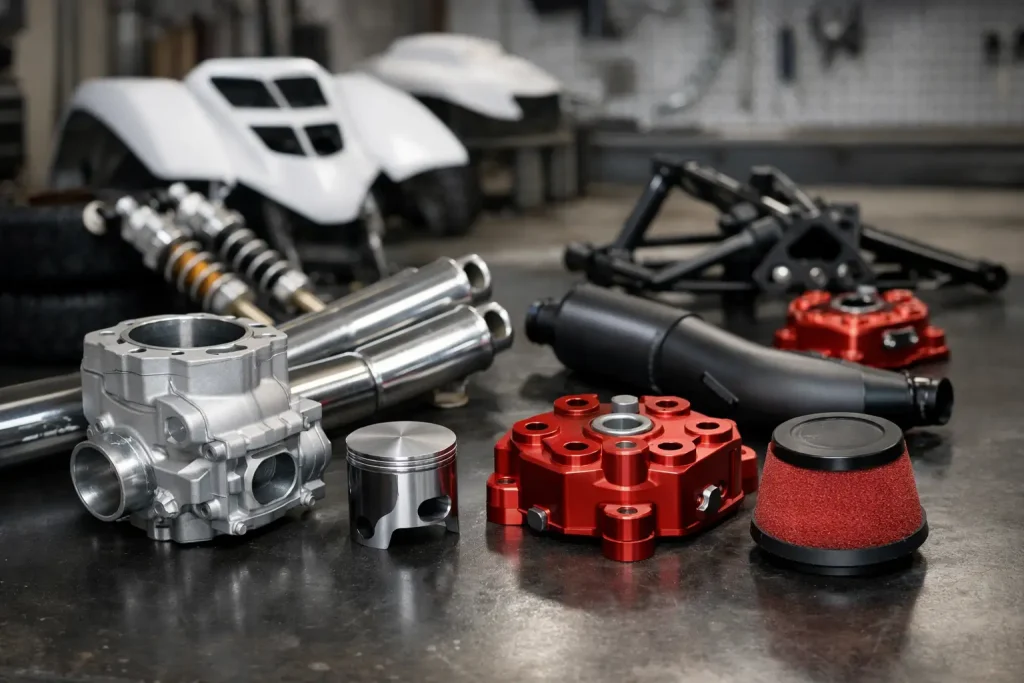
A Banshee build can go sideways fast when the wrong part shows up on your bench. That is why the oem vs aftermarket banshee parts question matters more than most riders think. On a machine this iconic, the right answer depends on whether you are chasing factory-correct reliability, hard-to-find replacement fitment, or more power than Yamaha ever shipped.
OEM vs aftermarket banshee parts: what is the real difference?
OEM means Original Equipment Manufacturer. In Banshee terms, that is the factory-style part built to the original Yamaha spec for fit, function, and intended performance. If you are replacing a stock clutch component, carb hardware, electrical piece, or chassis item and want the closest match to what the quad came with, OEM is usually the benchmark.
Aftermarket covers everything built outside that original factory supply chain. That can mean budget replacement parts, upgraded performance components, cosmetic pieces, or heavy-duty alternatives designed to solve known weak points. Some aftermarket parts are excellent. Some are junk. That wide range is exactly why riders get mixed results.
The mistake is treating this like one side is always better. It is not. A stock restoration, dune build, drag setup, and trail rider all have different needs. The smart move is choosing parts based on where the machine spends its time and how much risk you are willing to accept on fitment, durability, and tuning.
When OEM parts make the most sense
If your goal is factory reliability, OEM usually wins on consistency. The fit is predictable, the tolerances are familiar, and you are less likely to spend extra time modifying, shimming, grinding, or troubleshooting around a part that almost fits. On older machines like the Yamaha Banshee, that confidence matters.
OEM is also the better choice when one bad part can create a chain reaction. Think electrical components, seals, gaskets, transmission-related pieces, and hardware that affects alignment or wear. Saving a little money on a questionable copy can cost much more if it takes out a stator, causes an air leak, or shortens engine life.
For collectors and restorers, OEM carries another advantage: authenticity. If you are bringing a clean Banshee back to original condition, factory-style parts protect the value and look of the machine. A polished race part might perform well, but it is not the right fit for every build.
There is also a practical reason to stay OEM in some areas. Yamaha engineered many stock systems to work together. When you replace one piece with an original-spec part, you usually avoid having to retune or rework the rest of the setup.
The downside of OEM
The weak point is availability and price. Banshees are no longer rolling off the line, so some factory parts are harder to source and more expensive than riders expect. In certain categories, OEM is the ideal option on paper but not always the easiest one to get quickly.
OEM also is not automatically stronger or better for performance. A stock pipe, stock suspension component, or stock intake-related part may be right for a restoration, but not for a rider trying to wake up the motor or handle aggressive riding conditions.
Where aftermarket banshee parts shine
Aftermarket parts are a huge part of why the Banshee still has such a strong following. This platform lives on because riders can still find replacement components, race-proven upgrades, and specialty parts that take the machine well beyond stock.
Performance is the obvious reason many riders go aftermarket. Pipes, reed cages, carburetor upgrades, porting-related components, cool heads, clutch systems, and suspension upgrades can transform how a Banshee runs and feels. If your goal is stronger midrange, harder top-end pull, better cooling, or a setup tailored for dunes or drag racing, aftermarket is where those gains happen.
Aftermarket also fills gaps when OEM parts are discontinued, overpriced, or simply not the best option anymore. In some cases, modern replacement designs improve on known factory limitations. A heavy-duty axle, upgraded chain setup, or better shock package may give you more durability than the original part ever offered.
Then there is budget. Not every rider wants or needs a factory-correct build. If you are keeping a rider in service, a quality aftermarket replacement can make financial sense, especially on cosmetic items or less critical components.
The downside of aftermarket
The problem is variation. One aftermarket brand may be race-tested and dependable, while another may look similar in the box and fail early. Fitment can be inconsistent, materials can vary, and some parts require extra tuning or installation knowledge that casual buyers do not expect.
That matters even more on a two-stroke ATV. A cheap intake component, poor gasket set, low-quality piston kit, or questionable electrical part can turn a simple repair into a real engine problem. The Banshee is an enthusiast machine, but it is not very forgiving when low-grade parts affect air leaks, fuel delivery, ignition, or cooling.
OEM vs aftermarket banshee parts by category
This is where the decision gets easier. Some categories lean strongly one way, while others depend on your build.
For engine internals and sealing components, many riders prefer OEM or premium aftermarket only. There is not much room for compromise inside a Banshee motor. Crank-related parts, seals, gaskets, and critical wear items should come from trusted sources with a proven record.
For cosmetic pieces and basic chassis replacements, aftermarket can be perfectly fine if the quality is there. Plastics, grab bars, bumpers, nerf bars, and certain controls often come down to style, budget, and intended use.
For suspension, intake, exhaust, and cooling upgrades, aftermarket usually leads because those categories are all about improving performance or tailoring the machine to your riding conditions. A stock Banshee can be fun. A properly set up Banshee is a different animal.
For electrical parts, many experienced owners stay cautious. This is one area where chasing the cheapest option often backfires. If you are replacing stator, CDI-related, or wiring components, reliability should come first.
How to decide what belongs on your build
Start with the purpose of the quad, not the catalog. If the machine is a clean restoration or low-hour stocker, OEM will usually keep the project on the right path. If it is a dune machine, trail rider, or performance build, the right aftermarket parts can add real value.
Next, think in terms of critical and non-critical parts. If a part affects engine health, safety, or core reliability, quality should outweigh price. If a part is mostly cosmetic or easy to replace later, you have more room to consider less expensive alternatives.
You also need to be honest about your tuning tolerance. Some aftermarket parts are excellent, but they only work well when the rest of the combo is sorted. Pipes may want different jetting. Intake changes can shift fueling needs. Clutch upgrades may expose wear elsewhere. If you want bolt-on simplicity, OEM-style parts are often less stressful.
Finally, buy around your long-term plan. A rider who is slowly building a high-performance Banshee should choose components that work together. Throwing random aftermarket parts at the quad usually costs more than building with a clear goal from the start.
The smart buyer’s rule for Banshee parts
Do not buy by label alone. Buy by reputation, fitment confidence, and intended use. OEM is not always the best value, and aftermarket is not automatically a compromise. The real win is knowing which areas of your Banshee deserve factory-spec parts and which ones benefit from smart upgrades.
That is especially true on a machine with this much personality. The Yamaha Banshee rewards good choices and exposes bad ones quickly. Whether you are fixing a stock survivor, building a reliable weekend rider, or chasing serious performance, the part that saves money upfront is not always the part that saves your build.
At Banshee Retailer, we see this every day. The riders who end up happiest are not the ones chasing the cheapest cart total. They are the ones matching the part to the job, the setup, and the way they actually ride.
If you are stuck between OEM and aftermarket, slow down and look at what the quad needs next, not what sounds best on paper. A Banshee built with the right parts in the right places is faster, more reliable, and a lot more fun to keep in the garage.