
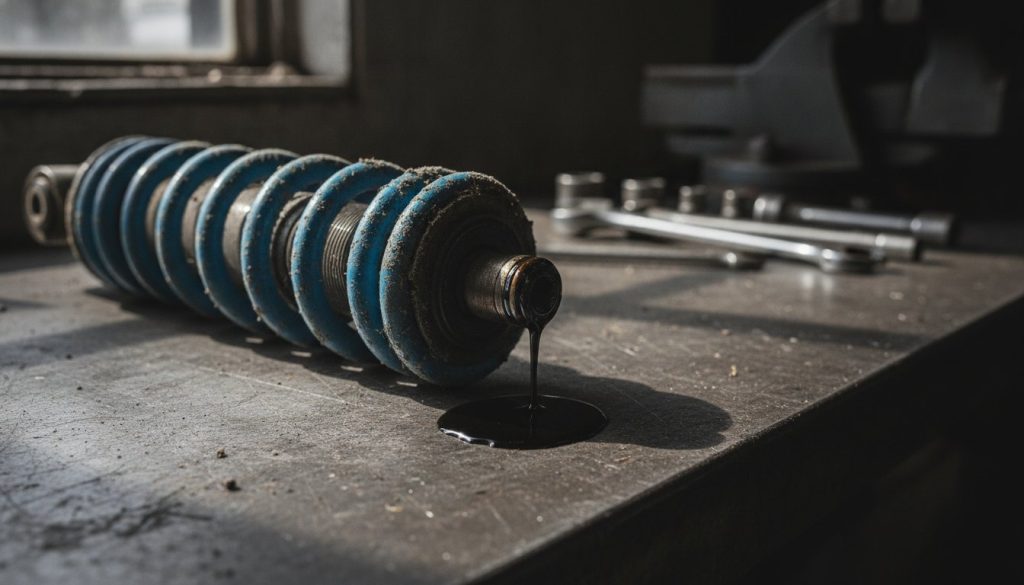
That puddle of oil under your rear shock isn’t just a nuisance; it’s a warning that your Yamaha’s performance is about to fall off a cliff. Many riders ignore the signs of aging components until a simple trail ride turns into a dangerous, unpredictable mess. If you’ve felt your machine wallow through corners or bottom out on tiny bumps, you’re likely overdue for a professional Banshee suspension rebuild. This isn’t just about rider comfort. It’s about protecting your rare OEM plastics and preserving the structural integrity of your frame from harsh, unabsorbed impacts that can cause permanent fatigue.
We understand the hesitation. Nobody wants to be the person overcharged at a shop for service they didn’t actually need. However, riding on blown shocks is a gamble that eventually ends with broken parts or a bruised ego. This guide provides the ultimate checklist to identify failing internal seals, worn bushings, and faded damping before they cause catastrophic failure. You’ll gain the confidence to know exactly when to invest in professional service to restore that “like-new” handling. We are diving into the technical red flags and the simple tests you can perform in your own garage to keep your Banshee flying level and landing soft.
Key Takeaways
- Learn how a properly tuned suspension acts as a critical shield for your rare Yamaha frame and OEM plastic kit against structural fatigue.
- Master a 7-point inspection checklist to identify visible oil weeping and shaft pitting before you schedule a professional Banshee suspension rebuild.
- Identify dangerous handling symptoms like the “bucking bronco” rear-end kick and front-end wash out that signal your damping has failed.
- Discover why restoring high-quality OEM shocks provides better long-term value and performance than buying entry-level, non-serviceable aftermarket units.
- Understand why a suspension refresh is the mandatory foundation for safely managing high-performance upgrades like high-performance engine builds.
Why Your Yamaha Banshee Suspension System Is Unique
The Yamaha Banshee 350 is a legend for a reason. Its twin-cylinder, two-stroke engine delivers a sudden surge of torque that most modern four-strokes simply can’t replicate. This aggressive power delivery creates a specific mechanical challenge: extreme rear shock squat. When you hit the powerband, the weight transfers instantly to the rear, forcing the shock to manage massive loads while maintaining traction. For owners of vintage models produced between 1992 and 2006, the suspension is actually the primary line of defense for the chassis. A worn-out shock doesn’t just ride poorly; it allows harsh energy to transfer directly into the metal, leading to structural cracking in the frame.
Unlike generic utility quads, the Yamaha Banshee 350 specifications highlight a sophisticated setup. You have a dual-rate spring configuration in the front to handle small chatter and big hits, paired with a complex rear linkage system designed for progression. Thinking you can “set it and forget it” on a 20 year old machine is a recipe for disaster. Rubber seals dry out, nitrogen leaks, and internal fluids break down into a watery sludge that provides zero protection. A professional Banshee suspension rebuild is the only way to restore the precision required for high-speed stability.
The Anatomy of a Banshee Shock
Inside every high-performance Banshee shock is a world of precision. A central piston moves through hydraulic fluid, controlled by a specific sequence of metal discs called shim stacks. These shims dictate how the quad reacts to every bump. A nitrogen chamber provides the pressure needed to prevent the oil from foaming under stress, while the seal head keeps that pressure contained. On the rear, the external reservoir is vital. It increases oil capacity and provides a cooling surface, which is essential during long, high-speed dune sessions where heat can otherwise cause the suspension to fade and fail.
The Stress of the Two-Stroke Snap
The “hit” of a two-stroke engine is what makes a Banshee iconic, but it’s also what kills weak shocks. Sudden torque puts immense pressure on the rear shock valving, demanding immediate response to keep the tires planted. If you’ve added performance mods like Tommey T6 Exhaust Pipes, you’ve increased that demand even further. Higher horsepower means more speed and harder acceleration, which pushes the factory valving past its intended limits. Every significant engine upgrade necessitates a professional Banshee suspension rebuild to ensure the chassis can actually handle the extra power without bucking or bottoming out.
The 7-Point Banshee Suspension Rebuild Checklist
Your shocks speak to you through leaks and rattles long before they actually snap. Ignoring these signals doesn’t just ruin your Sunday ride; it puts unnecessary stress on your machine’s structural components. A proactive inspection is the best way to determine if you need a professional Banshee suspension rebuild before a minor leak turns into a bent shock shaft or a cracked frame. Use this checklist to evaluate your current setup and catch failures early.
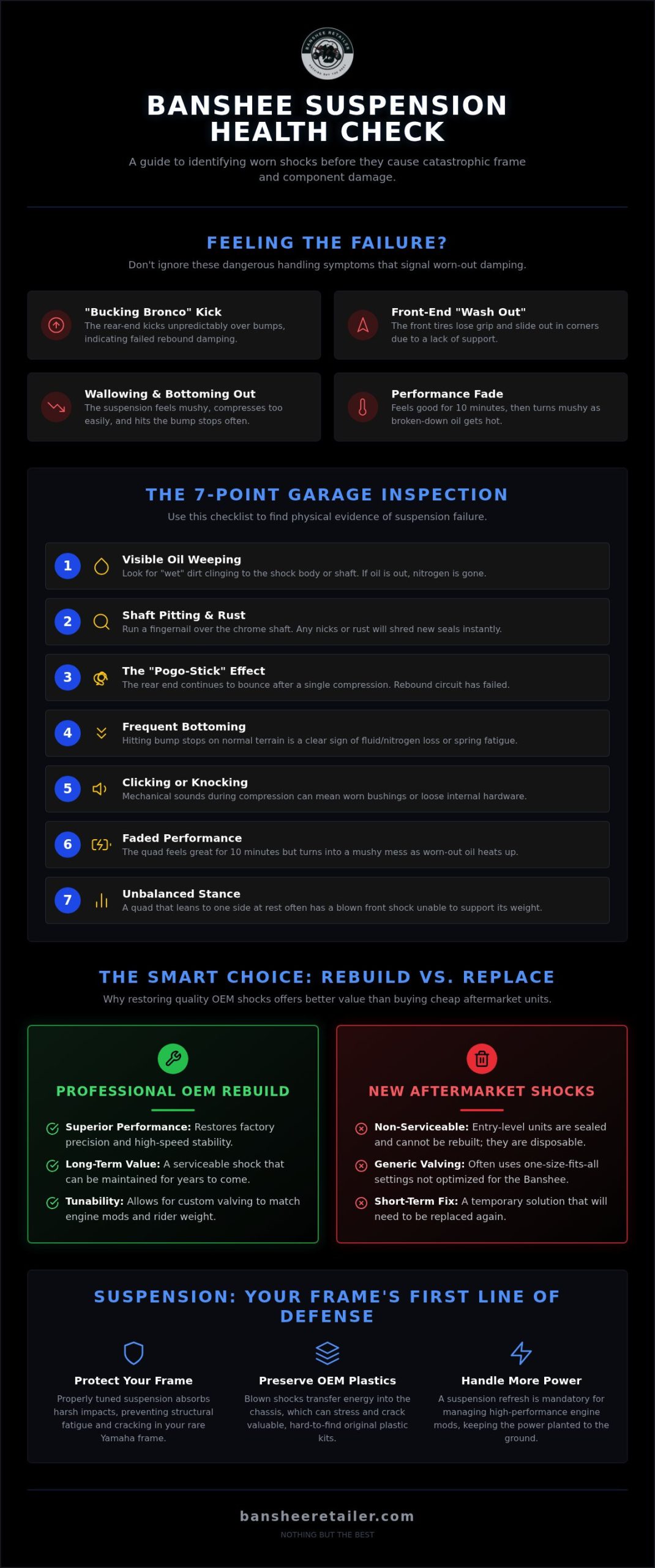
- Visible Oil Weeping: Look for “wet” dirt clinging to the seal head or the main shock shaft. If oil is escaping, nitrogen is likely gone too.
- Shaft Pitting: Run a fingernail over the chrome shaft. Any nicks, rust, or flaking chrome will act like sandpaper, shredding your internal seals instantly.
- The Pogo-Stick Effect: If the rear end continues to bounce after a single bump, your rebound damping is non-existent.
- Frequent Bottoming: Hitting the bump stops on terrain you used to clear easily is a clear sign of oil cavitation or spring fatigue.
- Clicking or Knocking: Mechanical sounds during slow-speed compression often point to worn bushings or loose internal hardware.
- Faded Performance: If the quad feels great for ten minutes but becomes a “mushy” mess as the shocks get hot, your oil is broken down.
- Unbalanced Stance: A quad that leans to one side usually has a blown front shock that can no longer support the vehicle’s static weight.
Physical Inspection Points
Get down on your knees and look closely at the shock shafts. Even a tiny nick from a stray rock can tear through a fresh seal in minutes. Check your rubber bump stops for dry rot or missing chunks. If they are falling apart, your shocks have been taking metal-on-metal hits that can damage the internal piston. Don’t forget to inspect the nitrogen schrader valve. If it looks mangled or shows signs of tampering, someone without the right tools has likely compromised the system pressure. Maintaining these components is a key part of following official ATV safety guidelines to keep your machine predictable and safe.
The Bounce Test Technique
A static bounce test is the fastest way to feel what’s happening inside the shock body. Stand on the footpegs, push down hard with your full body weight, and let go. A healthy Banshee should compress smoothly and return to its original height exactly once without extra oscillation. If the quad keeps bobbing like a boat, your rebound damping is dead. Watch for “dead spots” where the shock feels like it has no resistance in the first inch of travel. This usually means air has mixed with the oil, requiring our expert Banshee suspension services to bleed the system and restore hydraulic integrity.
Handling Symptoms: How Blown Shocks Ruin the Ride
Blown shocks do more than just leak; they transform your machine into a dangerous, unpredictable beast. One of the most common and terrifying symptoms is the “Bucking Bronco” effect. When you hit a jump or a series of whoops, a failed rear shock can’t control the spring’s release. Instead of soaking up the hit and settling, the rear end kicks up violently. This happens because the internal rebound damping has failed, often due to oil cavitation or a total loss of nitrogen pressure. It turns a fun day at the dunes into a constant battle to stay over the handlebars.
On the front end, symptoms usually manifest as vague steering or a “wash out” feeling in corners. If your front shocks have uneven internal pressure or leaked oil, the quad will dive unevenly during hard braking or aggressive cornering. This creates a sensation where the front tires refuse to bite, pushing you wide into obstacles. You might also experience suspension fade. This is a specific failure where the quad feels perfect for the first five minutes but becomes a bouncy pogo stick as the oil heats up and loses its viscosity. If you can’t trust your machine to hold a line, it is time for a professional Banshee suspension rebuild. Once your shocks are restored, understanding banshee suspension tuning will help you dial in the perfect settings for your riding style and terrain.
The most expensive symptom of failed damping is frame-slap. When your suspension is totally shot, it fails to stop the travel before the metal components collide. This sends a massive shockwave through the chassis that can crack a vintage frame or shatter a rare 1996 Yamaha Banshee OEM Plastic Kit. Your suspension is the only thing standing between your expensive components and the unforgiving ground.
High-Speed Stability Issues
Speed wobbles on the flats are a classic sign that your damping is dead. Without proper compression damping to keep the tires glued to the dirt, the front end becomes light and nervous at high speeds. Every pebble sends a shimmy through the steering stem. A professional Banshee suspension rebuild restores the hydraulic resistance needed to stabilize the steering. Predictable cornering lines return because the shocks can finally manage the weight transfer properly, allowing you to pin the throttle with total confidence.
Rider Fatigue and Safety
Riding a quad with zero damping is a brutal physical workout. Your body ends up absorbing every jarring impact the shocks missed. This often leads to “whiskey throttle” incidents where you accidentally pull the gas because your hands are bouncing off the grips. Arm pump is a common byproduct of poor suspension tuning because your muscles are constantly fighting the unmanaged vibrations of the chassis. Investing in a Banshee suspension rebuild isn’t just about speed; it’s about staying safe and riding longer without feeling like you’ve gone ten rounds in a boxing ring.
Professional Rebuild vs. Buying New Aftermarket Shocks
Choosing between a professional Banshee suspension rebuild and a set of shiny new shocks is a common crossroads. For most riders, the decision comes down to long-term value. Rebuilding your original equipment (OEM) shocks is almost always a smarter investment than purchasing entry-level, generic aftermarket units. These budget shocks often feature non-serviceable bodies, which means they are essentially disposable items. Once they leak, they become scrap metal. In contrast, your factory Yamaha shocks were built to be serviced, allowing you to restore peak performance without the high cost of premium race-ready replacements.
Beyond the initial savings, a professional service offers something a box-store shock cannot: custom valving. A specialist can adjust the internal shim stacks to match your specific weight and riding style. Whether you are blasting through dunes or technical trails, a tailored setup transforms the machine’s personality. Collectors also place a high premium on authenticity. If you ever decide to list your 2006 Yamaha Banshee 50th Anniversary for sale, having rebuilt OEM or high-end Elka units will significantly bolster the resale value compared to generic, unbranded parts.
The DIY Rebuild Risk Assessment
It is tempting to try a rebuild in your own garage, but the risks are substantial. Banshee shocks operate under extreme internal pressure, with nitrogen charges reaching up to 200 PSI. Handling these components without the proper safety gear and charging stations can lead to serious injury. Common DIY mistakes include leaving trapped air in the oil or damaging the delicate shims during assembly. Professional shops use specialized vacuum bleeders to ensure every air bubble is removed, providing the consistent hydraulic resistance that a manual bleed simply cannot achieve.
When to Replace Instead of Rebuild
Sometimes, a rebuild is not enough. If you find cracked shock bodies or shafts with deep gouges that cannot be polished out, it is time to look for replacements. If you are building a competitive machine with a Duncan Racing Complete Engine, you might outgrow the factory shock’s capabilities entirely. In these cases, upgrading to Elka Suspension provides the high-speed adjustment needed for serious racing. If you are starting fresh with a new Yamaha banshee frame for sale, matching it with a modern suspension setup ensures your build starts with a perfect foundation.
Trusting Your Banshee to Professional Specialists
Your machine is more than just a vehicle; it’s a piece of two-stroke history. Whether you’re preserving a collector-grade 2006 Yamaha Banshee 50th Anniversary or keeping a 1992 model pinned on the trails, a generic powersports shop often lacks the specific expertise these machines demand. At Banshee Retailer, our approach focuses exclusively on the legendary 350 chassis. We understand the nuances of the factory geometry and how it interacts with modern performance demands. A professional Banshee suspension rebuild isn’t a side project for us. It’s a core part of ensuring these vintage machines remain safe and competitive for another twenty years.
We often integrate our suspension services into full-vehicle restoration projects. It makes little sense to invest in a rare 1996 Yamaha Banshee OEM Plastic Kit or a pristine frame if the shocks are allowed to bottom out and cause structural damage. There’s also a critical synergy between your powertrain and your chassis. If you’ve spent the time and money on a Duncan Racing Complete Engine, you need a tuned suspension that can actually put that massive power to the ground. Without proper valving, that extra horsepower just results in wheel spin and lost control. Investing in a Banshee suspension rebuild is the foundation for any high-performance build.
Our Comprehensive Service Process
Our rebuild process is methodical and transparent. We begin with a full disassembly of every component, followed by ultrasonic cleaning to remove decades of grime and degraded oil. Every internal part undergoes a multi-point inspection to check for wear that others might miss. We don’t cut corners on materials. We use only premium seals and high-index suspension fluids designed to resist thinning under high heat. The process concludes with precision nitrogen charging and final testing to ensure performance consistency across all shocks. This level of detail is what separates a basic oil change from a true performance restoration.
Ready for the Dunes?
Timing is everything when it comes to maintenance. Waiting for the first big trip of the season to realize your shocks are blown is a recipe for a ruined weekend. Now is the ideal time to ship your components to our specialists for a professional refresh. A professional Banshee suspension rebuild ensures your machine is ready for the most demanding terrain before the season even begins. We make the process simple: you box them up, send them to our workshop, and we return them ready to bolt on and ride. Don’t let a faded rear shock hold you back from the peak of the dune. Schedule your Banshee suspension service with our experts today and feel the difference that specialist knowledge makes on the dirt.
Restore Your Ride and Protect Your Legend
Your Banshee is more than a machine; it’s a high-performance legacy that demands precision. A professional Banshee suspension rebuild isn’t just a maintenance task. It’s the essential foundation for safely managing the power of Duncan Racing builds or Tommey T6 exhaust systems. By identifying failing seals and worn damping now, you prevent the jarring impacts that lead to cracked frames and shattered OEM plastics. We’ve specialized in Yamaha Banshee performance since our inception, focusing exclusively on the structural integrity and handling of these legendary 350 twins.
Our team is dedicated to vintage Banshee preservation, ensuring your 1992 classic or 2006 anniversary model remains trail-ready for years to come. Don’t let a “bucking” rear end or vague steering ruin your next trip to the dunes. Take the first step toward restoring that signature “like-new” handling today. Our experts are ready to transform your ride from unpredictable to unstoppable with specialized care you won’t find at a generic shop. Book Your Professional Banshee Suspension Service and get back to pinning the throttle with total confidence.
Frequently Asked Questions
How much does a typical Banshee suspension rebuild cost?
Rebuild costs vary based on the shock’s condition and the specific parts required for a full restoration. A professional service typically includes deep cleaning, fresh seals, and a nitrogen charge. While prices fluctuate across the industry, the investment is significantly lower than purchasing high-end aftermarket sets. We recommend contacting us directly for a detailed assessment of your shocks to ensure you get an accurate estimate tailored to your machine’s current state.
Can I rebuild my Banshee rear shock myself?
Rebuilding a rear shock at home is extremely dangerous because of the high-pressure nitrogen charge, which often exceeds 200 PSI. Without specialized vacuum bleeders and nitrogen charging stations, you risk leaving air bubbles in the oil or causing physical injury. Professional technicians use precision tools to ensure every shim is seated perfectly and the hydraulic system is 100% air-free. It’s safer and more reliable to trust this complex mechanical task to seasoned specialists.
How often should I service my Yamaha Banshee shocks?
You should service your shocks at least once every riding season or after approximately 40 to 50 hours of aggressive use. If you frequently ride in the dunes or on high-speed trails, heat and sand will degrade the oil and seals much faster. Regular maintenance prevents the internal components from wearing down the shock body itself. A proactive Banshee suspension rebuild ensures your machine remains predictable and protects your frame from harsh, unmanaged impacts.
What is the difference between a rebuild and a revalve?
A rebuild focuses on restoring the shock to factory specifications by replacing worn seals, bushings, and oil. A revalve goes a step further by changing the internal shim stacks to customize how the shock reacts to your specific weight and riding style. While a rebuild fixes leaks and restores damping, a revalve tunes the performance for aggressive racing or heavy trail use. Both processes are essential for maintaining a high-performance machine like a Banshee.
Why is my Banshee bottoming out even on small bumps?
Bottoming out usually happens because your shocks have lost their nitrogen charge or the internal oil has cavitated and turned into foam. Without the correct hydraulic resistance, the spring is left to do all the work alone, which it isn’t designed to do. This puts immense stress on your chassis and can even crack your frame. If your quad hits the bump stops on small jumps, your damping system has likely failed internally and requires immediate attention.
Is it worth rebuilding the stock Banshee shocks or should I upgrade?
Rebuilding stock shocks is highly recommended for most riders because the OEM Yamaha components are high-quality and fully serviceable. Restoring the factory setup maintains the resale value of classic units like the 2006 50th Anniversary model. However, if you’ve upgraded to a Duncan Racing Complete Engine, you might require the advanced adjustment features of Elka Suspension. For general trail and dune riding, a professional rebuild offers the best balance of cost and performance.
How long does a professional suspension rebuild take?
A professional Banshee suspension rebuild typically takes between five to ten business days, depending on the availability of specific seal kits and the current workshop volume. This timeframe allows for a meticulous disassembly, ultrasonic cleaning, and final dyno testing to verify performance. We work efficiently to get your components back to you before the season peaks. Shipping your shocks during the off-season is the best way to ensure you are ready for the first ride.
Do I need to rebuild the front and rear shocks at the same time?
It is best practice to service the entire system at the same time to maintain a balanced chassis. If you only rebuild the rear shock, the front end may feel vague or “mushy” in comparison, leading to unpredictable handling in corners. Servicing all three shocks ensures that the damping rates are consistent across the quad. This synchronization is vital for rider safety and provides the “like-new” feel that makes a Banshee so enjoyable to ride.