
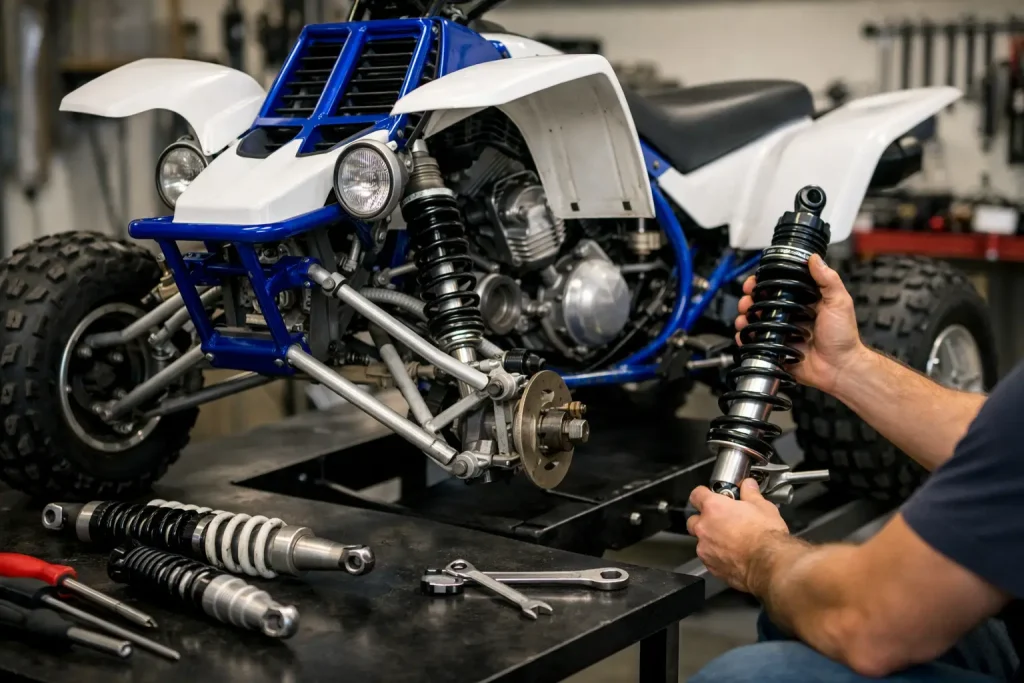
A Banshee that feels twitchy in corners, bottoms out too easily, or starts kicking sideways through chop usually is not asking for more horsepower. It is asking for suspension work. Yamaha Banshee suspension repair is one of the smartest ways to bring an aging quad back to life, because worn shocks, sloppy bushings, and tired linkage can make even a strong-running machine feel loose, harsh, and unpredictable.
The tricky part is that suspension problems rarely show up as one dramatic failure. More often, the quad slowly gets worse over time. Riders adapt to it. They lean harder, slow down in rough sections, or blame tire pressure and setup. Then they ride a properly sorted Banshee and realize how much control they have been giving up.
Why Yamaha Banshee suspension repair matters
The Banshee is still one of the most recognizable sport quads ever built, but most of these machines are not young anymore. Years of trail riding, dune use, hard landings, and basic age all catch up with the front end and rear suspension. Seals dry out. Oil breaks down. Bushings develop play. Bearings wear. Mounting points can even oval out if the machine has been run too long with slop in the system.
That matters because suspension is not just about comfort. It affects steering accuracy, braking stability, traction, rider confidence, and how well the chassis handles power. A fast Banshee with worn suspension can feel sketchier than a mildly built quad with a fresh, dialed setup. If you care about control, corner speed, and keeping the machine planted, suspension repair is not optional maintenance. It is core maintenance.
Common signs your Banshee suspension needs attention
Some symptoms are obvious. Oil on the shock body, a pogo-stick ride, or clunking from the front end means something is wrong. Others are easier to miss. If the quad pushes wide in turns, dives too hard under braking, or feels unsettled over repeated bumps, suspension wear may be the cause.
Uneven ride height is another giveaway. If one corner sits lower, or the rear sags more than it should, you may be dealing with a weak shock, tired spring, or worn linkage components. Excessive steering wander can also point to front-end wear, especially in the A-arm bushings, ball joints, or tie rod ends. Suspension repair often overlaps with general chassis repair, and that is exactly why proper diagnosis matters.
Start with diagnosis, not parts swapping
A lot of owners jump straight to shocks. Sometimes that is correct. Sometimes it is only half the problem.
A solid Yamaha Banshee suspension repair job starts with a full inspection of the front shocks, rear shock, A-arm bushings, swingarm bearings, carrier condition, linkage, mounting hardware, and frame tabs. Preload settings and tire pressure should also be checked before you assume hard parts are bad. A badly adjusted setup can mimic worn suspension, and worn chassis parts can mimic bad shocks.
This is where experience with the platform matters. The Banshee has its own patterns of wear, especially on machines that have been modified, raced, or ridden aggressively. A suspension system should be evaluated as a package. Replacing one blown shock while leaving sloppy pivot points in place will not give you the result you want.
Front suspension problems on the Yamaha Banshee
The front end usually tells on itself first. If the handlebars feel vague, the quad darts around, or you hear noise when the suspension cycles, start there.
Worn A-arm bushings are common, especially on older machines that have seen mud, water, or poor maintenance. Once those bushings wear, the arm can shift more than it should, which changes alignment under load and creates an unstable feel. Ball joints can cause similar issues, and they are especially important on a sport quad that sees aggressive steering input.
Front shocks are another major wear point. Factory shocks can still work well for many riders when they are in good shape, but age takes a toll. Leaking seals, faded damping, and weak rebound control make the front end harsh on square edges and sloppy in transitions. If your Banshee feels like it rebounds too quickly after a hit or drops too fast into the next one, the shocks likely need service or replacement.
Rear suspension issues that hurt traction
The rear end is where many riders feel the biggest difference after repair. A tired rear shock can make the machine squat too much under acceleration, kick up over whoops, or bottom on landings that used to feel manageable.
The rear linkage and swingarm area deserve close attention. If those bearings and bushings are worn, the rear suspension cannot move through its travel correctly. Instead of absorbing bumps smoothly, it binds, shifts, or transmits impact into the chassis. That means less traction and more rider fatigue. On a Banshee, where power delivery can come on hard, rear suspension control is a major part of keeping the quad hooked up.
It also depends on how you ride. Dune riders, trail riders, and drag-oriented owners place different demands on the rear setup. There is no one-size-fits-all answer, which is why suspension repair should account for your riding style, not just the fact that parts are worn.
Repair, rebuild, or upgrade?
This is where the right choice depends on the condition of the machine and what you expect from it.
If your shocks are rebuildable and the rest of the suspension is structurally sound, a rebuild often makes the most sense. Fresh seals, correct oil, nitrogen recharge where applicable, and proper inspection can restore performance without forcing you into a full replacement. For many riders, that gets the machine back to a level that feels dramatically better than what they have been living with.
If the shocks are beyond practical repair, or the quad has outgrown the stock setup, an upgrade can be the better move. Aftermarket shocks, wider front-end setups, and performance-oriented spring rates can transform the way a Banshee handles. The trade-off is cost, and sometimes setup complexity. More performance is only better if the parts are matched to rider weight, terrain, and actual use.
There are also cases where the smart answer is a combination. Rebuild what is worth saving, replace what is worn out, and upgrade only where it gives a clear benefit. That approach usually delivers the best value.
What to replace during Yamaha Banshee suspension repair
If you are already into the suspension, it is smart to address wear items that can undermine the job. Bushings, bearings, seals, heims, mounting hardware, and worn fasteners are not glamorous, but they matter. A fresh shock mounted in sloppy hardware still creates a loose, noisy front or rear end.
Pay attention to alignment and torque as well. Suspension repair is not only about replacing bad parts. It is also about putting the chassis back together correctly. Improper torque can bind movement or allow play to return quickly. Cheap substitute hardware can create fitment issues, especially on an older platform where proper dimensions matter.
That is one reason Banshee owners tend to do better working with specialists who actually know these machines. The Yamaha Banshee market is full of parts options, but not all of them deliver the same fit, durability, or ride quality.
Why quality parts matter on an older platform
A Banshee is not the machine to fix twice because you bought the cheapest suspension parts available. Inferior bushings wear fast. Low-quality ball joints introduce slop. Poorly built shocks may look the part but fail to control the chassis under real riding conditions.
That does not mean every repair needs top-tier race parts. It means the parts should match the job. A trail rider restoring a mostly stock machine has different needs than a dune rider with a modified engine and aggressive setup. Good suspension repair is not about spending the most. It is about buying parts that fit correctly, last, and support the way the quad is actually used.
At Banshee Retailer, that platform-specific focus is the whole point. When you are dealing with a legendary machine that deserves proper support, real Banshee knowledge saves time and prevents expensive guesswork.
When professional service is the better call
Some suspension work is well within reach for an experienced home mechanic. Basic inspection, bushing replacement, and bolt-on component swaps are straightforward if you have the right tools and know what normal wear looks like.
Shock rebuilding is different. Nitrogen charging, internal wear inspection, seal replacement, and tuning require more than a basic garage setup. The same goes for diagnosing a chassis that still handles poorly after parts have already been replaced. If the machine has multiple worn systems, previous modifications, or signs of frame damage, professional service can save a lot of frustration.
That is especially true if you want the machine to feel right, not just function. A Banshee with sorted suspension steers cleaner, lands flatter, and puts power down with more confidence. You feel it right away.
A good suspension repair should leave your Banshee feeling tighter, more predictable, and more fun to ride. If the quad has been beating you up, pushing through turns, or feeling unsettled at speed, do not assume that is just the personality of an older two-stroke sport quad. Often, it is the personality of worn parts asking for attention.