
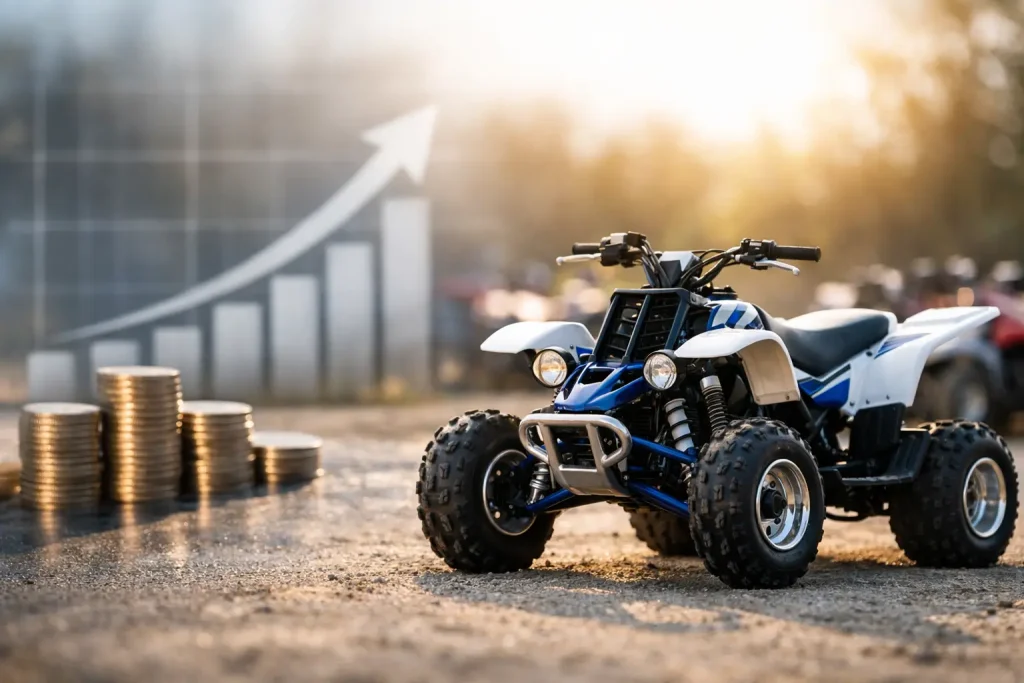
A clean Yamaha Banshee still stops people in their tracks, and that reaction is a big reason yamaha banshee resale value trends keep getting stronger than many riders expect. This is not just nostalgia talking. The Banshee sits in a rare spot where performance reputation, limited supply, and enthusiast demand all push in the same direction. If you are buying, selling, restoring, or holding one, value is no longer about age alone. It is about how well the machine fits what today’s market actually wants.
Why Yamaha Banshee resale value trends keep climbing
The biggest driver is simple: no more new Banshees are being made, and the good ones keep getting harder to find. Every year, more units are parted out, neglected, heavily modified, or damaged beyond what most buyers want to take on. That shrinks the pool of desirable machines.
At the same time, demand has not faded. For longtime owners, the Banshee is still one of the most iconic sport ATVs ever built. For newer buyers, it has become something else too – a collectible performance machine with real attitude. That combination matters. A quad that is both fun to ride and culturally established tends to hold value better than one that is only practical.
There is also a wider market effect. Used powersports buyers have become more selective, but they are still willing to pay for known platforms with strong parts support. The Banshee benefits from one of the deepest enthusiast ecosystems in the ATV world. Buyers know they can still source engines, chassis parts, suspension upgrades, pipes, plastics, and repair help. That confidence supports resale value.
The biggest factors shaping Yamaha Banshee resale value trends
Not every Banshee moves the market the same way. Two machines from the same year can sell thousands apart, and the difference usually comes down to a few specific variables.
Originality versus modification
This is where the market gets interesting. In many collector segments, stock always wins. With Banshees, it depends on the quality and purpose of the build.
A clean, mostly original machine with correct components, tidy wiring, matching cosmetics, and no signs of abuse usually commands strong money. That is especially true for buyers who want a dependable rider with long-term value.
But high-end modifications can also add value if they are done right. A professionally built engine, quality pipes, upgraded suspension, fresh bearings, strong compression, and documented work from a specialist can make a Banshee more desirable than a tired stock unit. The problem is that the market punishes random mods. Cheap parts, hacked frames, poor jetting, unfinished wiring, and no paperwork rarely help resale. They usually do the opposite.
Condition still beats almost everything
Cosmetic condition matters, but mechanical condition matters more. Buyers will overlook some wear if the engine is healthy, the transmission shifts cleanly, the chassis is straight, and the quad starts and runs the way it should.
A shiny Banshee with weak compression or a questionable crank is not a premium machine. On the other hand, a rider-quality unit with a documented top end rebuild, clean carbs, dialed suspension, and solid tires may sell fast because it feels lower risk.
This is one of the clearest trends in the market right now. Buyers want fewer surprises. They are paying up for machines that look sorted, not just dressed up.
Year, color, and rarity
Some years and color combinations get more attention, especially among collectors and brand loyalists. Special graphics, cleaner surviving examples, and less common OEM appearances can push pricing beyond the average rider market.
That said, rarity only helps when the machine is complete and presentable. A rare year in rough shape is still a project. The premium shows up when rarity meets condition.
Paperwork and ownership history
A Banshee with a clear ownership story is easier to value and easier to sell. Buyers like to know who built it, who serviced it, and what was replaced. Receipts, compression numbers, parts lists, and service records do more than reassure – they justify price.
In a market full of vague seller claims, documentation creates separation.
What the market pays more for now
The strongest resale performers tend to share the same profile. They are complete, clean, mechanically sorted, and built with purpose. That could mean a near-stock survivor, a tasteful restoration, or a well-executed performance setup.
Right now, buyers are rewarding machines with high-quality parts from known brands, fresh engine work, healthy frames, and suspension that has not been ignored. Good plastics, clean seats, straight subframes, and tidy controls all matter because they signal how the quad was treated.
There is also growing appreciation for turnkey ownership. A buyer may pay more upfront for a Banshee that needs nothing because the alternative is spending months chasing parts, correcting someone else’s shortcuts, and paying for rework. That is especially true for out-of-state buyers who cannot inspect every detail in person.
What hurts resale value fastest
The market has become pretty efficient at spotting red flags. If you are selling, these are the issues that can drag price down quickly.
Poor-quality modifications are near the top of the list. A Banshee should feel intentionally built, not pieced together from whatever was cheapest online. Missing airboxes, mystery engine internals, rough welds, universal electrical fixes, and mismatched parts make buyers assume there is more wrong than they can see.
Deferred maintenance is another major value killer. Leaking seals, clapped-out swingarm bearings, noisy transmissions, loose front ends, and neglected brakes tell buyers they are inheriting a project. Even if the machine runs, the discount starts building fast.
Then there is presentation. Dirty carbs, faded photos, missing side panels, torn seats, and vague descriptions do not just look bad – they make the whole machine feel uncertain. In this market, uncertainty costs money.
Buyer behavior is changing the Banshee market
One reason yamaha banshee resale value trends are staying strong is that buyers are more informed than they used to be. They know what a proper engine build looks like. They ask about compression, crank work, porting, carb setup, and who did the labor. They can tell the difference between premium aftermarket parts and low-grade replacements.
That has created a healthier gap between average machines and top-tier ones. Years ago, sellers could rely more on the Banshee name alone. Today, the badge gets attention, but condition and credibility close the deal.
This also means honest sellers with real documentation have an advantage. If your machine has a clean service history, quality components, and a known setup, the market is more willing to pay for it.
Should you restore, modify, or sell as-is?
It depends on the starting point.
If you have a mostly complete Banshee with a healthy frame and drivetrain, a smart refresh can improve value. Fresh plastics, corrected wiring, rebuilt carbs, suspension service, proper tires, and documented engine work often make financial sense because they widen your buyer pool.
If the machine is already heavily modified, lean into quality rather than trying to force it back to stock. Buyers in that segment care more about execution than originality. A clean, proven dune or trail build with matching parts and professional tuning can sell very well.
If the quad needs major engine, chassis, and cosmetic work all at once, selling as-is may be the smarter move unless you already have access to the right parts and labor. Restoration costs add up quickly. The resale gain is real, but only if the work is done to a standard the market trusts.
For owners who want to protect value over time, support matters. Access to the right parts and service keeps a Banshee from sliding into project territory. That is one reason specialist-focused businesses like Banshee Retailer continue to matter in this market – buyers and owners want confidence that the platform can still be maintained the right way.
Where Yamaha Banshee resale value trends may go next
The most likely near-term pattern is continued strength at the top of the market, with weaker pricing for rough or incomplete units. Clean examples should stay desirable because supply is not improving. The question is not whether Banshees remain wanted. It is which Banshees remain worth premium money.
Expect the spread between average and excellent units to keep growing. Collectible stock machines, clean restorations, and well-documented performance builds are positioned best. Half-finished projects and bargain-bin rebuilds will still sell, but usually to buyers who expect a discount big enough to cover the risk.
That is the real takeaway for owners and shoppers alike. The Yamaha Banshee market is mature now. It rewards quality, punishes shortcuts, and puts real value on machines that are ready to ride, ready to maintain, and easy to trust.
If you are watching the market closely, do not focus only on asking prices. Watch which machines actually move, how quickly they sell, and what kind of details sellers can prove. That is where the real value trend shows up – and where the next smart buy or smart sale usually starts.