
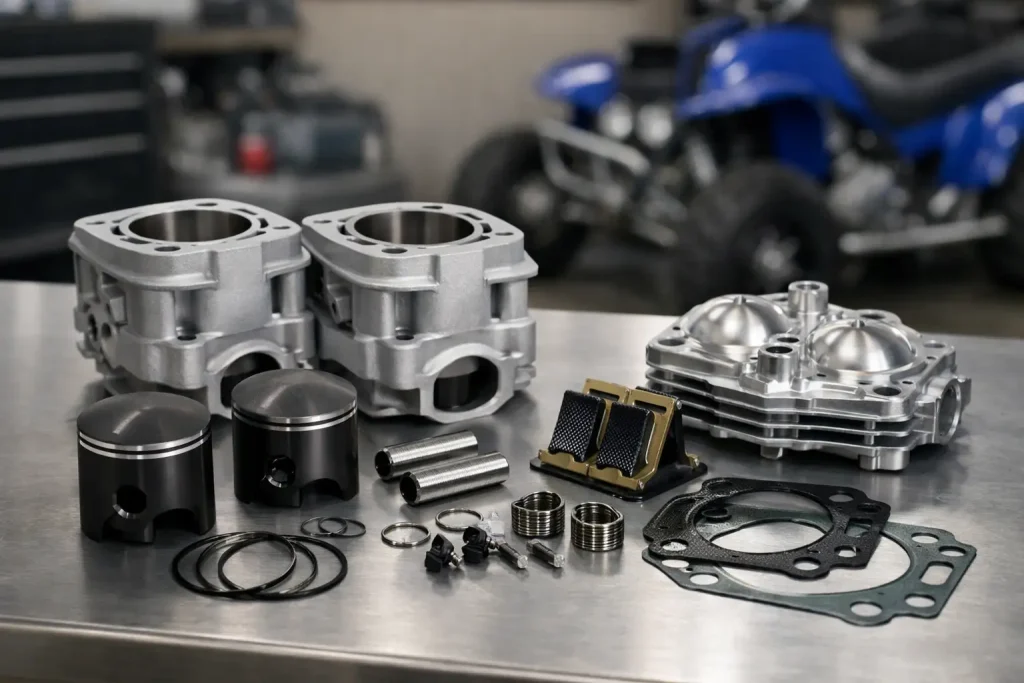
A tired top end usually tells on itself before it fails. Hard starts, weak compression, extra piston noise, and that flat feeling in the midrange all point to the same place – your engine is asking for attention. If you are shopping for a banshee top end kit, the goal is not just to freshen the motor up. It is to restore crisp response, protect the crank and cylinders, and make sure the build matches how you actually ride.
On a Yamaha Banshee, the top end is where performance and reliability meet fast. Two-strokes are simple compared to a lot of modern engines, but they are not forgiving when parts quality, piston clearance, or cylinder condition get ignored. That is why the right kit matters. A bargain setup can cost you a second teardown. A well-matched kit can bring the bike back to life and keep it there.
What a banshee top end kit should include
At minimum, a proper kit should cover the wear components needed for a complete refresh. That usually means pistons, rings, wrist pins, circlips, and top-end gaskets. Depending on the package, you may also see small end bearings and options for bore size.
That sounds straightforward, but fitment is where riders get tripped up. Not every Banshee has stock cylinders in stock condition. Some have already been bored. Some have port work. Some are running aggressive pipes and timing changes that put more demand on the top end. Buying a kit based only on year and model is not enough if the engine has any history.
Before you order, you want to know whether your cylinders are standard bore or oversized, whether they need a hone or a fresh bore, and whether the cylinder walls are actually worth reusing. If the cylinders are out of round, scored, or worn beyond spec, even the best pistons will not save the build.
Stock replacement or performance top end?
This is where your riding style matters more than marketing language. If your Banshee is a trail machine, dune cruiser, or mostly stock rider that you want to start easy and run clean, a stock-style rebuild makes sense. A quality cast piston setup is often a smart choice for this kind of build because it keeps cost under control and delivers dependable service life when clearances are correct.
If your quad has pipes, porting, higher compression, or you simply ride it hard, forged pistons may be the better move. They are typically stronger under heat and abuse, but they can also require different clearances and warm-up habits. That is the trade-off. Forged pistons are not automatically better for every rider. They are better for certain builds and certain conditions.
A lot of owners make the mistake of buying for peak power when what they really need is consistency. A Banshee that starts clean, pulls hard through the range, and holds compression is more fun than one built around bragging rights but always needs something.
The biggest factors when choosing a kit
Cylinder condition comes first. If your cylinders are clean and measure within spec, you may only need the right piston size and a proper finish. If they need machine work, buy the kit after the cylinders are measured, not before. Ordering pistons first and hoping the machine shop can make them work is backwards.
Piston material is next. Cast pistons are a solid option for stock and mild builds. Forged pistons are better suited for higher heat and more aggressive setups. Neither choice is universal. It depends on how the engine is built, how the quad is ridden, and how disciplined you are about warm-up and jetting.
Brand quality also matters more on a two-stroke than many riders expect. Ring seal, skirt profile, machining consistency, and gasket quality all affect how the engine runs and how long it lasts. Cheap kits can look fine on the bench and still cause headaches once the motor is hot.
Then there is tuning support. A fresh top end changes the engine. Compression comes back, ring seal improves, and the motor may respond differently than your worn setup did. If the carburetors were already borderline lean, a new top end can expose that problem quickly. The kit is only one part of the result.
Why cheap kits usually cost more
There is a reason experienced Banshee owners get picky about top-end parts. A low-cost kit can save money on day one, but if piston tolerances are inconsistent or the rings do not seal well, you are gambling with the whole engine. Blow a top end and now you are not just replacing pistons. You may be dealing with damaged cylinders, debris through the bottom end, and more downtime than the original rebuild would have cost.
That is especially painful on a Banshee because the platform rewards good parts. These engines respond well when they are assembled correctly, and they punish shortcuts when they are not. Quality components, correct clearances, and honest fitment guidance are worth paying for.
Signs your Banshee needs a top-end rebuild now
Some riders wait for a failure. That is usually the expensive route. If compression is dropping, the bike is harder to start, power feels soft, or the engine is rattling more than normal, it is time to inspect things. Excessive smoke can point to other issues too, but poor ring seal and piston wear should absolutely be on the list.
A plug reading that suddenly changes, unexplained power loss, or visible scoring through the exhaust port are all reasons to stop guessing and pull the cylinders. On a performance two-stroke, catching wear early is part of protecting the rest of the engine.
Installation matters as much as the kit
Even the right banshee top end kit can fail if the install is sloppy. Ring end gap needs to be checked. Piston orientation needs to be right. Circlips need to be seated correctly. Gasket surfaces need to be clean, and torque specs need to be followed carefully.
Break-in matters too, but not in the exaggerated way people sometimes talk about it. You are not babying the engine forever. You are heat-cycling it properly, confirming jetting is safe, and letting the rings seat without abusing a fresh build. A rushed first ride with questionable jetting can undo the whole job.
This is also where honest support becomes valuable. Banshee owners do not just need a box of parts. They need confidence that the kit matches the cylinders, the setup, and the intended use. That is the difference between a generic parts seller and a real Yamaha Banshee specialist.
Matching the top end to the rest of the build
A fresh top end can expose weak links elsewhere. If crank seals are tired, the tune is off, or the carbs are dirty, the rebuild will not perform the way it should. That does not mean every top-end job has to become a full engine build, but it does mean you should take a realistic look at the whole package.
For a mostly stock machine, a clean stock-style rebuild often delivers the best value. For a dune or drag-oriented setup, it may make sense to pair the new top end with cylinder work, better reeds, carb tuning, and a closer look at ignition and cooling habits. More performance usually means less margin for error.
That is why the smartest buy is not always the most aggressive kit. It is the one that matches the actual condition of the motor and the way the quad will be ridden after the rebuild.
Buying with confidence
When you shop for Banshee parts, the biggest advantage is dealing with people who know the platform inside and out. A dedicated Yamaha Banshee source can help you sort out stock versus oversized pistons, cast versus forged options, and whether your symptoms point to a simple refresh or a deeper issue. That saves money, but more importantly, it saves repeat labor.
At Banshee Retailer, that specialist approach is the whole point. Riders want parts that fit, performance that makes sense, and support that does not disappear after checkout. On a machine as iconic and unforgiving as the Banshee, that kind of backing matters.
A top-end rebuild is one of the best investments you can make in a Banshee when the engine is getting tired. Done right, it brings back throttle response, compression, and confidence every time you kick it over. The smart move is to buy for your cylinders, your setup, and your riding style – not just the lowest price on the screen.